
Templates & Examples
Template licence for multiple clients: run the reuse check.
Five questions that settle whether a template pack may travel from one client project to the next — plus the short email that gets the seller's answer in writing.
You are not sure whether you can legally adapt a template pack for a second client project. You used it once, it worked, and now another engagement needs something similar — and behind the question sits the awkward one: what happens if a client asks where the layout came from and you cannot show you were allowed to use it?
That is two questions wearing one coat. The first is what the licence you agreed to permits: who may use the files, how many projects or clients it names, and whether you may adapt a page and hand the result over. The second is what you promise your own client, which is a separate arrangement you control.
This page works through the first question: a five-question reuse check, the wording patterns worth knowing, a permission record you can show a client, and a short email that asks the seller to confirm multi-client use in writing. None of it is legal advice. Terms vary between sellers and change over time, so read the current terms yourself and ask a qualified adviser about anything commercially important.

Build your brief as you read.
Use the free 25-page fillable Lead Magnet Brief Builder: 19 lettered worksheets from finding an idea to a one-page brief, a draft skeleton and a launch plan, with three fictional worked examples.
Free: we send you a short email first. Reply VERIFY to it and we email you the workbook, then five short follow-up emails over 12 days (one names our own $79 Workflow Pack), then at most one email a week, when we publish a new guide. Every email has an unsubscribe link.
The five-question reuse check.
Run these before you open the pack for a second project. Each answer goes into your record whether it is a yes, a no or a silence.
| Question | What to look for | Where it is written |
|---|---|---|
| 1. What did I license? | The tier: a free item, a paid pack, a one-design licence or a subscription seat. Each usually carries different permissions. | The terms page linked from the product page, plus your receipt |
| 2. How many users does it cover? | Wording such as “one user”, “single seat”, “named user”, or a stated number of seats. | The section on use, installation or permitted number |
| 3. Does the wording count clients? | Whether permission is per project, per end client, unlimited, or silent on the point entirely. | The section on transfer, sub-licensing or client work |
| 4. May I adapt and hand over? | Whether you may edit and rebrand the pages, deliver a finished PDF, and whether the client may edit the file themselves. | The section on derivative works, transfer and distribution |
| 5. Can I prove permission? | A dated written confirmation from the seller, or the exact sentence in the terms you are relying on. | Your own record |
A reading framework, not legal advice. No template seller has been assessed or ranked for this site.
Read the tier and the seat count, not the sales page.
A free item, a paid pack and a subscription seat can look identical on a product page and behave very differently in the terms. Canva's Content License Agreement is a useful public model of how a large seller writes this down, because it separates free content from paid content. Under that agreement a licence is issued when you export a design, for each piece of content in it, and a Pro Content Licence covers that content in a single Canva Design — using the same piece in a new design needs a new licence, issued automatically on export if you have a subscription. The section headed Additional Rights for Client Designs sets out how a design containing content may be transferred to a client: with a written agreement restricting the client's use to their own use in line with those terms, with you remaining responsible for their compliance, and with one design going to a single client. It also states that the section does not allow you to transfer or sub-licence content on a standalone basis.
Designrr's software licence agreement shows the other half of the pattern: it grants a non-exclusive licence to use the software for the purposes described in its Documentation, and defines a “Permitted Number” of one unless a valid licence says otherwise. The seat count is written down, not assumed.
Read both as models of structure rather than statements about your pack. Then open yours and look for the same four things: which tier you bought, what event gives you the licence, how many users or designs or projects it names, and whether client work has a clause of its own.
Seats are not clients.
The two limits are different constraints and packs often carry both. A seat limit governs who may open and use the files; a client limit governs how many sets of finished output they may produce. The wordings you will meet tend to fall into four shapes:
- Single-user. One person may use the files. A contractor or associate opening them on their own machine may fall outside it.
- Team or multi-seat. A stated number of users, sometimes named. Keep the list, because people leave.
- Per project or per end client. Each new client project needs a fresh licence or an upgraded tier.
- Unlimited client projects, no resale. You may adapt the files for as many engagements as you like, but you may not sell or give away the template itself.
The fourth shape is the one consultants usually want, and it is worth asking for directly rather than hoping silence means yes.
Client-count wording: what to ask when it is silent.
Many packs describe personal or business use and say nothing about clients. Silence is not permission, and it is not a refusal either — it is an unanswered question, which is why the email below exists. Before you write it, separate three acts that one sentence in a licence may treat very differently:
- Using the layout to build a document you then rewrite in your own words for a client.
- Delivering the finished file as a PDF, branded for the client, with no editable source handed over.
- Giving the client the editable template so they can run it themselves. This is the act that most often counts as sub-licensing, and the one most likely to need a separate arrangement.
Keep the second act as your default. It is usually the cleanest position: the client receives a finished document, you keep the working files, and nothing in the arrangement looks like passing off someone else's template as your own product. If a client genuinely needs to edit the file, ask the seller about that specific case.
Keep a permission record you can show a client.
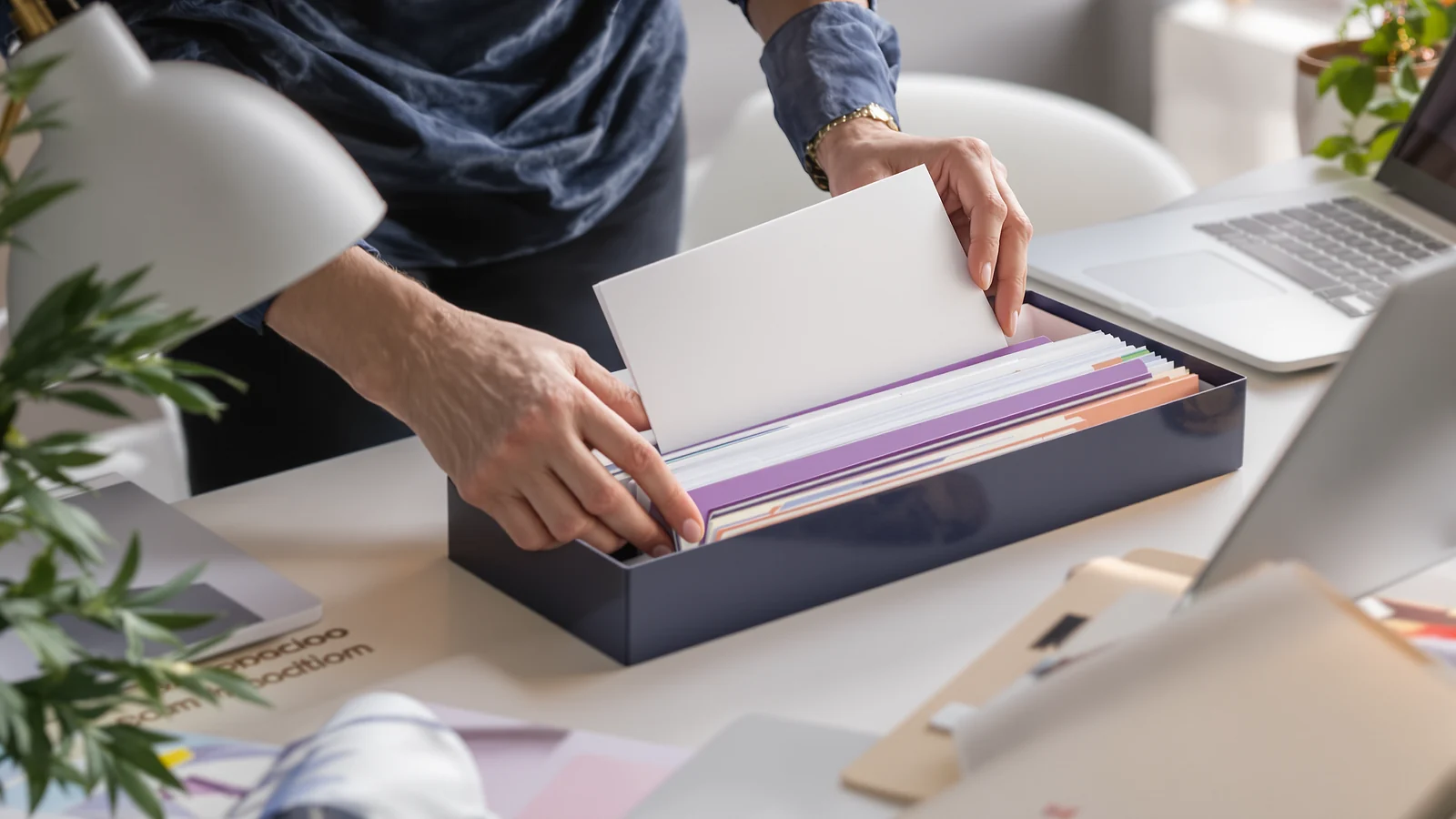
You will not remember which pack you used on which engagement in eighteen months, and the client may still have the file. One page per pack is enough, with seven fields:
- Pack name and version, and where you bought or downloaded it.
- Date of purchase and order reference.
- The licence page address, and the date you read it.
- The exact sentence you are relying on, copied rather than paraphrased.
- The seller's written confirmation, with its date.
- Which client projects have used it, and what you changed.
- Who in your business may open the files.
“Operations pack, version 2. Licence read 3 March; wording relied on: business use, unlimited projects, no resale. Seller confirmed on 5 March that finished, rebranded PDFs may go to clients and the editable source stays with us. Used on the Clearline People Advisory new-manager plan; headings and examples rewritten. Files open to two named users.”
Clearline People Advisory is a fictional example. Your own entry will be shorter, because the sentence you actually relied on is the whole point of the record.
The short email that gets it in writing.
Send this before the second project starts, not after the file has gone out. Name your order so the reply attaches to something.
Ask the seller to confirm multi-client use
Subject: Client use under the [pack name] licence
Hello,
I bought [pack name] on [date], order [reference]. I am a consultant and I use the pack to build workbooks that I deliver to my own clients under their branding.
Could you confirm in writing:
- whether my licence covers use across several client projects, and if so whether there is a limit on the number of clients;
- whether I may adapt and rebrand the pages and deliver the finished PDF to a client;
- whether the client may edit the file themselves, or whether it should go to them as a finished document only.
If multi-client use needs a different licence, please tell me which one.
Thank you,
[name]
Two practical notes. Ask for the answer in the message rather than a link to terms you have already read, because a link answers nothing new. If the reply covers two questions and skips the third, ask again — a partial answer is not permission for the part it missed. Save the reply beside the pack.
The other worry: will the pack be too generic to use?
A clear licence does not make a pack worth adapting. You have downloaded free workbooks before and watched them sit in a folder, and no amount of paperwork fixes a file that names no reader, no moment and no decision.
Licence and quality are separate tests, and both are cheap to run before you start. On quality, ask two questions. Does the pack's structure match the task your reader has to finish this month — a handover, a decision, a conversation? And can you replace its generic examples with your own without the structure collapsing? If the answer to either is no, the licence is irrelevant, because the file will not be used.
The layout is rarely the credibility problem. Stock headings in a sensible order, with your steps, your terms and one anonymised client example inside them, read as your work. What damages credibility is a page that promises results, quotes a number nobody can source, or describes a process no consultant in your field follows.
That is why the free Lead Magnet Brief Builder spends its first worksheets on material rather than design: worksheet A finds ideas in your own notes, F is a source and permission log, H is a ten-field one-page brief, and L1 to L3 give a draft skeleton per format with a filled example row. Fill those in and you can adapt almost any layout without it turning generic.
For the wider version of the check, checking a lead magnet template's files and commercial licence covers what should be in the download itself, and what to check in lead magnet template packs sets out evaluation criteria with no product scored. Who owns the finished resource once a client has paid is a different question, covered in who owns the lead magnet.
This page contains no affiliate links, and no template seller is ranked or recommended here.
Questions about template licences for client work.
Can I reuse a template pack for multiple clients?
Only if the licence you agreed to allows it. Check the tier, how many users or end clients the wording names, whether adaption and handover are covered, and whether you can show the seller's answer in writing. Where the wording is silent, ask the seller and keep the reply.
Is a license agreement template the same as a template pack licence?
No. A license agreement template or license contract template is a contract document that grants rights, usually between a supplier and a customer. A template pack licence is the set of terms you accepted when you downloaded or bought the pack. An agreement between you and your client about the finished workbook is a third document, and one to discuss with a qualified adviser. We do not publish legal or contract documents here.
Can I use a free template for paid client work?
Sometimes, but free does not mean unrestricted. Free tiers are often limited to personal or non-commercial use, or to a single design. Read the terms attached to the free item itself, and ask the seller to confirm client use in writing before you deliver anything.
Sources & editorial notes
- Canva Content License Agreement, retrieved 10 November 2026. Cited for how a licence is issued on export for each piece of content, the single-design limit for Pro Content, and the conditions in the section headed Additional Rights for Client Designs for transferring a design to a client.
- Designrr Software License Agreement, retrieved 10 November 2026. Cited only for the shape of a software licence: a non-exclusive licence to use the software for the purposes described in its Documentation, and a “Permitted Number” of one unless a valid licence states otherwise.
- Lead Magnet Brief Builder, version 2.1, published at /free-starter-kit. Worksheets A, F, H and L1 to L3 are the ones referred to above.
- This article quotes no vendor price, statistic or performance figure. Licence terms differ between sellers and change over time; read the current terms in full and ask a qualified adviser about your own situation. Nothing here is legal advice.
Examples on this page are illustrative and fictional. See our Editorial Policy, Review Methodology and Affiliate Disclosure.
Know what the licence says before you adapt a page.
The free Brief Builder keeps your own steps, terms and examples in one place, so a template supplies the layout and your notes supply the judgement.
Free: we send you a short email first. Reply VERIFY to it and we email you the workbook, then five short follow-up emails over 12 days (one names our own $79 Workflow Pack), then at most one email a week, when we publish a new guide. Every email has an unsubscribe link.